Let's cut through the noise. You're here because you've seen the wild swings of Dogecoin's price – the memes, the tweets, the dizzying pumps and crushing drops. Maybe you bought some in 2021 and watched it soar, then crash. Or you're wondering if now is the time to get in. Understanding the Dogecoin price isn't about finding a magic formula; it's about deciphering a unique blend of community psychology, celebrity influence, and occasional flashes of real utility. This guide won't give you a guaranteed price target. Instead, it will give you the framework to make your own informed decisions, spot the real signals amidst the hype, and most importantly, manage the extreme volatility that defines this iconic meme coin.
What’s Inside This Guide?
- What is Dogecoin and Why is Its Price So Volatile?
- Dogecoin Price History: Key Moments and Lessons
- What Drives the Dogecoin Price? The 5 Key Factors
- How to Analyze Dogecoin Price for Trading
- Dogecoin Price Predictions: What Experts Say
- How to Trade Dogecoin: A Step-by-Step Guide
- Common Pitfalls and How to Dodge Them
What is Dogecoin and Why is Its Price So Volatile?
First, a quick clarification. If you searched for "dodge currency price," you almost certainly meant Dogecoin (DOGE). It started as a joke in 2013, featuring the Shiba Inu dog meme. But the joke got serious money behind it. Unlike Bitcoin with its capped supply, Dogecoin has an inflationary model, with 5 billion new coins minted each year. This design was meant to encourage spending, not hoarding.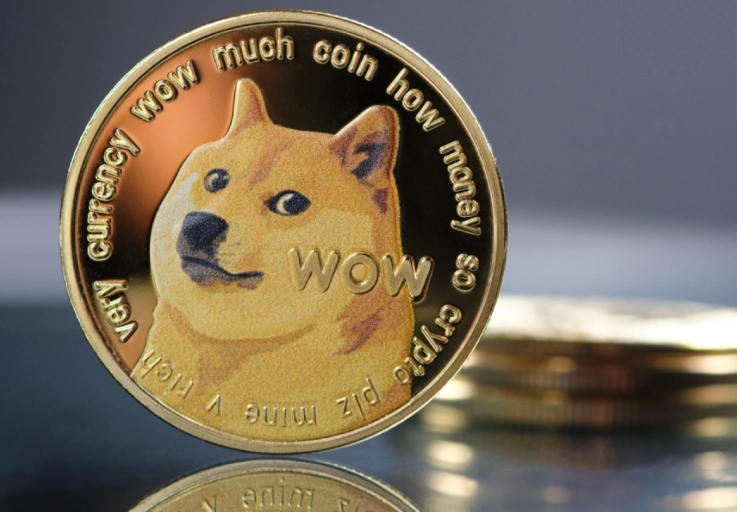
The volatility is legendary. One day it's up 40%, the next it's down 30%. Why?
- Retail-Driven Market: A huge portion of DOGE is held by small, retail investors. Large groups acting on emotion (like a Reddit forum) can move the price dramatically.
- Celebrity Amplification: A single tweet from Elon Musk can add or erase billions in market value in minutes. The price becomes a proxy for social media sentiment.
- Low Barrier to Entry: It's cheap per coin (psychologically) and available on nearly every exchange, making it the first stop for new crypto buyers who then amplify trends.
This isn't a stock with quarterly earnings. Valuing DOGE is an exercise in measuring hype, community strength, and network effect.
Dogecoin Price History: Key Moments and Lessons
The chart tells a story of mania and reality checks. Let's look at the pivotal points.
The 2017-2018 Bubble: DOGE rode the coattails of the broader crypto boom, rising from a fraction of a cent to about $0.018. Then it crashed with everything else, languishing below a penny for years. Lesson: In a bull market, even jokes can soar. In a bear market, they get hit hardest.
The 2021 Supernova: This was the defining moment. Fueled by the GameStop short squeeze frenzy, tweets from Elon Musk and Mark Cuban, and the #DogeToTheMoon meme, DOGE went parabolic.
- January 2021: Started around $0.008.
- May 8, 2021: Peaked at an all-time high of $0.7316 after Musk's appearance on Saturday Night Live.
- The subsequent crash was brutal, dropping over 70% in the following weeks.
This period taught us the double-edged sword of celebrity endorsement. The SNL episode was the most anticipated event in crypto, but "the news" became the sell signal. Everyone bought the rumor and sold the news – a classic market move played out on a global stage.
Post-2021 Consolidation: Since that peak, DOGE has found a rough trading range, often between $0.12 and $0.18, with spikes during broader market rallies. It has struggled to reclaim its highs, showing that sustaining meme-driven valuations is incredibly difficult.
What Drives the Dogecoin Price? The 5 Key Factors
Forget traditional finance metrics. Here's what actually moves the needle for DOGE:
- Social Sentiment & Celebrity Mentions: This is factor number one. Track Elon Musk (@elonmusk), but also watch for mentions from figures like Mark Cuban or Snoop Dogg. Tools like LunarCrush aggregate social volume and engagement. A sudden spike often precedes a price move.
- The Broader Crypto Market Tide: DOGE rarely moves against the market. When Bitcoin and Ethereum rally, DOGE usually follows, often with more leverage (bigger percentage gains). When they fall, DOGE falls harder. Check CoinMarketCap or CoinGecko for the overall market health.
- Adoption & Utility News: Real-world use cases provide foundational support. Past examples include Tesla briefly accepting DOGE for merchandise, the Dallas Mavericks accepting it for tickets, or integration into payment services like BitPay. News of a major new partnership can trigger sustained rallies beyond just a hype pump.
- On-Chain Activity and Whale Movements: This is where beginners miss the plot. While everyone watches Twitter, smart money watches the blockchain. If a large number of DOGE (from "whale" wallets) starts moving to exchanges like Binance or Coinbase, it often signals an intent to sell. Conversely, withdrawal from exchanges to private wallets suggests accumulation. Sites like IntoTheBlock provide this data.
- Community Momentum & Memes: The strength of the Dogecoin community on Reddit (r/dogecoin) and Twitter is a real asset. Organized campaigns or viral memes can drive coordinated buying, creating short-term price surges.
How to Analyze Dogecoin Price for Trading
You need a hybrid approach. Pure technical analysis can fail when a tweet blows up your chart pattern. Here’s a practical method:
Step 1: Check the Macro Sentiment. Before looking at a DOGE chart, look at Bitcoin. Is BTC above its 200-day moving average and in an uptrend? If yes, the environment is risk-on, favorable for DOGE. If BTC is struggling, any DOGE trade is a higher-risk bet against the trend.
Step 2: Identify Key Support and Resistance Levels. DOGE respects psychological levels and past price history. Key zones to watch:
- Major Support: $0.12, $0.08 (previous cycle lows).
- Major Resistance: $0.18, $0.22, and of course, the all-time high near $0.73.
I use the weekly chart to find these. The daily chart gets too noisy.
Step 3: Layer in Social & On-Chain Data. This is the secret sauce. Let's say DOGE is bouncing off $0.15 support. That's a technically bullish sign. Now, cross-check:
- Is social volume picking up positively?
- Are whale exchange inflows low or high? (Low is better for continuation).
- Is there any major news or event on the horizon?
If the technicals are green and the on-chain/social data isn't showing distribution, the setup is stronger.
Dogecoin Price Predictions: What Experts Say
Take all predictions with a mountain of salt, especially long-term ones. The crypto landscape changes too fast. However, analyst forecasts help gauge sentiment.
Most 2024-2025 predictions hinge on the broader crypto market cycle. If Bitcoin enters a new bull market post-halving, analysts like those from CoinPriceForecast suggest DOGE could retest levels between $0.25 and $0.40. More optimistic models from places like DigitalCoinPrice suggest an average price of $0.33 in 2025.
The $1 Dogecoin dream is a different beast. Mathematically, a $1 DOGE implies a market cap of over $140 billion. For context, that would have put it in the top 5 cryptocurrencies permanently in 2023. It's not impossible, but it would require a seismic shift: mass adoption as a payment currency far beyond its current niche, or a fundamental change in its economic model. Most sober analysts see this as a very low-probability, long-term "if everything goes perfectly" scenario, not a realistic short-term target.
The consensus? DOGE's price is likely to remain highly cyclical—exploding in bull markets, collapsing in bear markets, with its floor gradually rising if adoption continues.
How to Trade Dogecoin: A Step-by-Step Guide
Ready to act? Here’s a concrete plan, from zero to executed trade.
1. Choose a Reputable Exchange. You need a platform that lists DOGE, is secure, and suits your region.
| Exchange | Best For | Key Consideration |
|---|---|---|
| Binance | Global users, low fees, high liquidity. | Not available in the U.S. (use Binance.US, which has fewer features). |
| Coinbase | U.S. beginners, ease of use. | Higher fees unless you use Coinbase Advanced Trade. |
| Kraken | Security, good for both beginners and pros. | Interface can feel dated to some. |
| Robinhood | Extreme simplicity, fractional shares. | You don't own the actual coins (can't transfer them out). |
My personal preference is Kraken for security, but I use Binance for the deepest liquidity.
2. Fund Your Account & Buy DOGE.
- Sign up, complete KYC verification (ID required).
- Deposit fiat currency (USD, EUR) via bank transfer, debit card, or wire. Bank transfers are cheapest.
- Navigate to the DOGE trading pair (e.g., DOGE/USD).
- Place a market order to buy immediately at the current price, or a limit order to buy only if DOGE drops to your specified price.
3. Execute a Basic Risk-Managed Trade. Let's walk through a hypothetical scenario.
It's October 2023. Bitcoin is rallying, and DOGE is at $0.15. Your analysis shows $0.14 as strong support on the weekly chart, social sentiment is neutral, and whale inflows are low.
- Your Action: You decide to buy $500 worth of DOGE at $0.15.
- Your Stop-Loss: You set a sell order at $0.138, just below the key $0.14 support. This limits your potential loss to about 8%.
- Your Take-Profit Target: You identify the next resistance at $0.18. You set a sell order there. Your potential gain is 20%.
This gives you a positive risk/reward ratio (20% potential gain vs. 8% potential loss). You've defined your risk before entering the trade. This is non-negotiable.
Common Pitfalls and How to Dodge Them
I've made these mistakes so you don't have to.
Pitfall 1: FOMO Buying at the Top. You see DOGE up 50% in a day on Twitter. You panic-buy. This is how 90% of retail losses happen. The move is almost over. The Dodge: Have a watchlist. If you miss a pump, let it go. There will be a pullback. Wait for it to test a support level. Patience is free money.
Pitfall 2: Ignoring Position Sizing. Putting 50% of your portfolio into DOGE is gambling, not investing. Its volatility will wreck your psychology. The Dodge: Never allocate more than 1-5% of your total trading capital to a single meme coin trade. This way, even a 50% loss is manageable.
Pitfall 3: Becoming a Bag Holder. You bought at $0.60 in 2021, watched it crash to $0.10, and are still "holding for $1" hoping to break even. This ties up capital for years. The Dodge: Have an exit strategy for both profit AND loss. If a trade goes against you by a predefined amount (like 20%), cut it. Re-assess. Don't marry a trade, especially a meme coin trade.
Pitfall 4: Chasing "Sure Thing" Predictions. Someone on YouTube says DOGE will hit $1 next month. They're either lying, ignorant, or trying to sell you something. The Dodge: Use predictions as a gauge of market sentiment, not as trading signals. Do your own analysis from the steps above.
Frequently Asked Questions
Final thought: Trading Dogecoin is more about understanding crowd psychology and risk management than it is about cryptography or blockchain tech. It's a unique, high-risk, high-potential-reward asset class within crypto. Respect its volatility, never invest more than you can afford to lose, and always—always—use a stop-loss. The goal isn't to get rich overnight; it's to make informed decisions in a chaotic market and live to trade another day.
Reader Comments