Staking crypto rewards sound like a dream. You lock up some digital coins, and they magically generate more coins while you sleep. Passive income, they call it. The reality is more nuanced, and frankly, more interesting. It's not just free money—it's a fundamental shift in how you interact with blockchain networks, with real rewards and very real risks. I've been involved since the early days of Proof-of-Stake, and I've seen people make the same costly mistakes over and over. Let's cut through the marketing and talk about what staking rewards actually are, how to get them, and how to keep what you earn.
What’s Inside This Guide
What Staking Really Is (And Isn't)
Forget the complex jargon for a second. Staking is essentially putting your crypto to work to help secure a blockchain network. Instead of miners solving puzzles (Proof-of-Work), validators are chosen to create new blocks based on how much crypto they have "staked" as collateral. In return for providing this security service, the network pays them rewards, usually in the same cryptocurrency.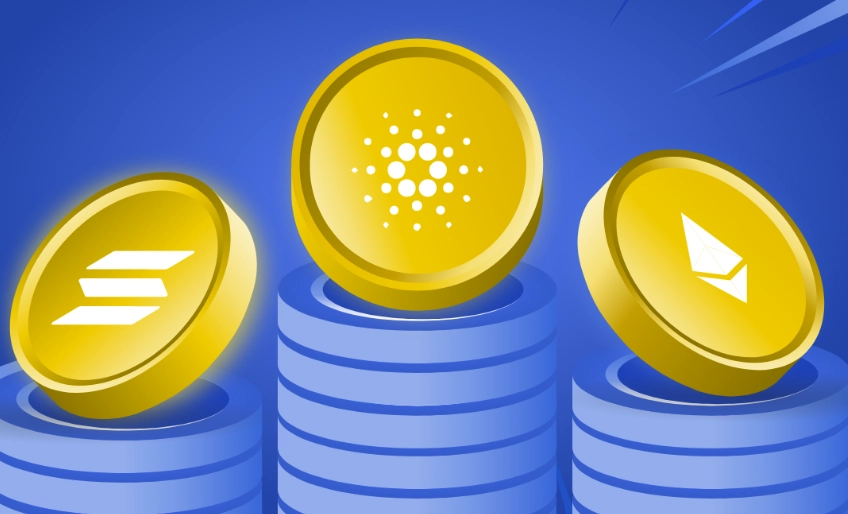
That's the textbook definition. Here's what they don't tell you upfront: You're trading liquidity for yield. Your coins are locked. You can't sell them if the market tanks overnight. That lock-up period is a hidden cost that many APY percentages conveniently ignore.
Not all cryptocurrencies can be staked. You need to look for ones that use a Proof-of-Stake (PoS) or related consensus mechanism. Ethereum (ETH) is the big one that switched to PoS. Others include Cardano (ADA), Solana (SOL), Polkadot (DOT), and Cosmos (ATOM). If someone tells you you can stake Bitcoin natively, they're misinformed—Bitcoin uses Proof-of-Work.
Where to Stake: Your Three Main Options
This is your first major decision. Each path has a different balance of convenience, control, and reward.
| Option | How It Works | Best For | Biggest Drawback |
|---|---|---|---|
| Centralized Exchange (CEX) e.g., Coinbase, Binance, Kraken |
You stake through the exchange's interface. They pool user funds, run the validators, and distribute rewards, taking a cut. | Absolute beginners. It's dead simple, often has no minimum, and sometimes offers faster unstaking. | You don't control your keys. You're exposed to the exchange's solvency risk. Rewards are often lower after their fee. |
| Solo Staking Using your own wallet & node |
You run your own validator software (like an Ethereum node) with a significant minimum stake (32 ETH for Ethereum). | Experts with technical skills and large capital. Maximum control and rewards (no middleman fees). | High technical barrier, constant uptime required, risk of "slashing" penalties for mistakes. |
| Staking Pools or Delegation e.g., Lido, Rocket Pool, wallet delegation |
You join a pool with other users, combining stakes to meet minimums. You get a liquid staking token (like stETH) in return. | Most practical users. Good balance of control (you hold tokens in your wallet), lower minimums, and competitive rewards. | You must trust the pool's smart contract security. Some charge fees. The liquid token (stETH) may trade at a discount to the underlying asset. |
I started on a CEX for the simplicity. But after a year, I moved most of my stake to a reputable pool. Why? The exchange's advertised APY looked great until I factored in their spread and withdrawal fees. The pool's net APY was actually higher, and I held the keys to my liquid staking tokens. That control matters.
Calculating Your Real Rewards
Seeing "5-15% APY" is enticing. But that number is almost never what you actually pocket. Here’s what eats into it:
- Validator or Pool Commission: This is their fee, usually 5-10% of your rewards. A 10% APY with a 10% commission is really 9%.
- Network Inflation: High staking rewards sometimes come from high network inflation. If the coin supply increases by 7% a year and you earn 10%, your real purchasing power gain is only about 3%.
- Compounding Frequency: Does the platform auto-compound your rewards daily, weekly, or monthly? More frequent compounding = slightly higher effective yield.
- Unstaking Period (The Hidden Cost): Your assets earn nothing for 7-28 days while unbonding. If you stake for a short time, this period can wipe out your gains.

Let's run a quick, realistic scenario. You stake 10 ETH.
- Advertised Network APY: 4.5%
- Pool Commission: 10%
- Your Net APY: ~4.05%
- After one year (no compounding for simplicity): You earn ~0.405 ETH.
- If ETH price stays flat, great. If it drops 20%, your USD value is down even with rewards.
The point? Don't chase the highest headline number. Look for a sustainable reward rate from a reliable validator/pool on a network you believe has long-term value.
Managing the Risks Nobody Talks About Enough
Market risk is obvious. These are the less obvious ones that can actually cause you to lose your principal.
Slashing: The Validator Penalty
If the validator you delegated to goes offline (downtime) or tries to attack the network (double-signing), the network slahes them—burning a portion of their staked funds. As a delegator, you lose a proportional amount. I once lost a small amount of ATOM because I picked a validator based solely on low commission. They had poor uptime. Lesson learned.
How to avoid it: Use tools like Mintscan (for Cosmos) or Rated.Network (for Ethereum) to check a validator's history—their uptime, commission history, and self-bonded stake (how much of their own money they have at risk). A validator with significant skin in the game is more aligned with you.
Liquidity Risk & Lock-Up Periods
This is the big one for me. You cannot react to market moves during the unbonding period. In a crash, you're a sitting duck. This is why liquid staking tokens (LSTs) like stETH or rETH have become so popular. You get a tradable token representing your staked position. Need liquidity? Sell the LST. But this introduces another risk: the LST can depeg from the underlying asset, especially in market panic.
Smart Contract & Protocol Risk
Your Actionable Staking Checklist
Ready to dip a toe in? Don't just send your crypto anywhere. Follow these steps.
- Pick Your Coin: Choose a PoS asset you plan to hold long-term (1+ years). This isn't for short-term trading.
- Choose Your Staking Method:
- Beginner? Start with a small amount on a reputable CEX like Coinbase. Get a feel for the process.
- Comfortable with wallets? Research the top staking pools for your chosen coin (e.g., Lido/Rocket Pool for ETH).
- Whale with tech skills? Consider solo staking if you meet the minimums.
- Do Your Validator Homework: If delegating, check uptime (>99%), commission, and self-stake. Don't delegate to the #1 validator—decentralize the network.
- Calculate the Real Yield: Subtract fees. Consider the unbonding period as a cost.
- Start Small: Make your first stake with an amount you can afford to be illiquid for months. See how the rewards flow in.
- Track Your Rewards: Use a portfolio tracker or spreadsheet. Are the net rewards meeting your expectations after fees and market moves?
Reader Comments