Let's be honest. The word "metaverse" got mangled. For a couple of years, it was a catch-all for every tech CEO's dream and marketer's buzzword. It promised a revolution, then delivered a lot of awkward VR meetings and pixelated land plots selling for absurd prices. The hype cycle crashed, and that's actually the best thing that could have happened. Now, we can talk about the metaverse without the fantasy. What's left is a set of real, if nascent, digital spaces with actual users, economies, and problems. This guide is for anyone who wants to look past the headlines and understand where the real value—and the real pitfalls—lie today.
What's Inside This Guide
What the Metaverse Really Means Now (It's Not Just VR)
Forget the single, unified virtual world. That's science fiction. The current metaverse is a collection of separate, often walled-garden platforms, mostly accessed through a computer screen, not a VR headset. The core idea that survived the hype is persistent, shared digital spaces where you have a stake.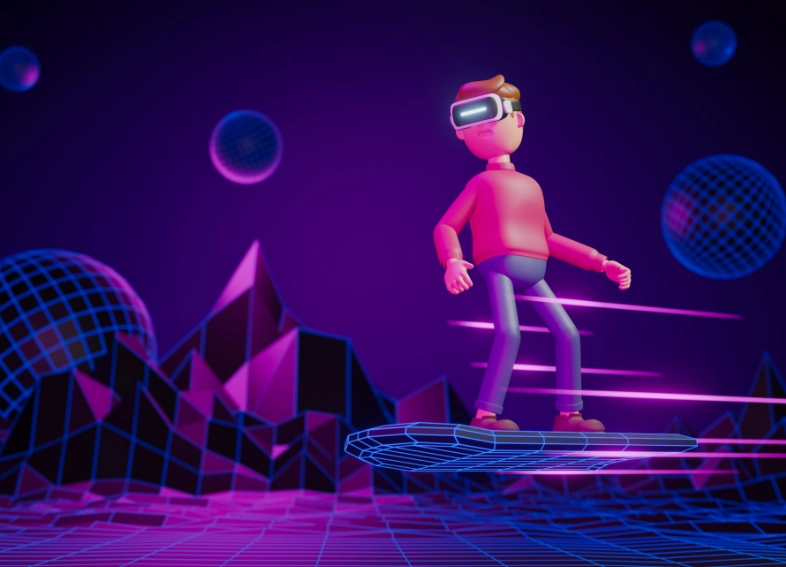
Your avatar, your digital clothes, a piece of virtual land—you can own these as assets (usually as NFTs) and take them from one experience to another, in theory. The blockchain is the ledger that makes this ownership possible and verifiable. This is the key shift: moving from renting digital items (like a skin in Fortnite) to actually owning them.
But here's the non-consensus part everyone glosses over: interoperability, the dream of taking your avatar everywhere, is miles away. The technical and business hurdles are massive. Each platform has its own art style, economy, and rules. Buying a Decentraland wearables NFT doesn't mean you can use it in The Sandbox. So when you invest, you're betting on a specific platform's ecosystem, not some abstract "metaverse" stock.
How to Invest in the Metaverse (A Realistic Guide)
Thinking of throwing money at the metaverse? Pump the brakes. This isn't a traditional market. Most of the value is speculative, tied to future adoption that may or may not come. Let's break down the avenues, from least to most risky.
The Indirect Play: Publicly Traded Companies
This is the safest route. You're not betting on a specific virtual world, but on companies building the infrastructure or content for many of them. Think chipmakers like NVIDIA, whose GPUs power the rendering of these worlds. Or gaming engines like Unity, which developers use to build experiences. Even Meta, despite its struggles, is a major player in VR hardware. You can buy these stocks through any brokerage. You're betting on the broader trend, not a single platform's success.
The Direct Digital Play: Platform Tokens and Virtual Assets
This is where it gets spicy and risky. You need a crypto wallet and comfort with decentralized exchanges.
Platform Tokens: Most metaverse platforms have a native cryptocurrency. MANA for Decentraland, SAND for The Sandbox, etc. Buying these is like buying a share in the platform's economy. The token is used for governance (voting on platform decisions), purchasing assets, and paying fees. Its value is directly tied to platform activity.
Virtual Real Estate: This is the headline-grabber. You buy a parcel of LAND (Decentraland) or an ESTATE (The Sandbox) as an NFT. Value depends on location, size, and traffic. A plot near a popular plaza or a major road (yes, digital roads matter) is worth more. You can build on it, host events, or rent it out.
Here’s a reality check most guides won't give you: 95% of virtual land is worthless. It's empty space with no visitors. The valuable plots are the ones with proven utility or foot traffic. Don't look at a map and think "this looks nice." You need to visit the platform, see where avatars actually congregate. A report from DappRadar in late 2023 showed that while total sales volume had cooled, activity was concentrating on premium, well-located parcels.
| Investment Type | How to Get It | Risk Level | What You're Actually Betting On |
|---|---|---|---|
| Company Stock (e.g., NVDA) | Traditional Brokerage | Medium | Broad tech/metaverse infrastructure growth |
| Platform Token (e.g., SAND) | Crypto Exchange (Coinbase, Binance) | High | Success & adoption of that specific platform |
| Virtual Land NFT | Platform Marketplace (e.g., OpenSea) | Very High | Utility & traffic of that specific digital location |
| Wearables/Items NFT | Platform Marketplace | Extreme | Cultural trends within a platform's community |
What Are the Biggest Metaverse Platforms Right Now?
Two names dominate the blockchain-based, user-owned metaverse conversation: Decentraland and The Sandbox. They are fundamentally different.
Decentraland feels like a strange, early-internet digital city. It's a browser-based 3D world where users own the land and create everything—art galleries, casinos, games, chat rooms. Its strength is its sheer weirdness and strong community of builders. Major brands like Samsung and Sotheby's have built outposts here. The downside? It can feel empty outside of scheduled events, and the user experience is clunky. You're investing in a social experiment with land.
The Sandbox leans into gaming. It uses a voxel-based style (think Minecraft or Roblox) and focuses on user-generated games and experiences. Its toolkit is more geared towards creating simple, playable games. They've aggressively partnered with huge IPs like The Walking Dead, Snoop Dogg, and Atari. The vibe is more "game creation platform" than "digital society." You're investing in a gaming ecosystem with land as the canvas.
Other notable spaces include Voxels (formerly Cryptovoxels), a simpler, more artistic world favored by digital art collectors, and Spatial, which is focused on virtual workspaces and galleries, often used for NFT exhibitions.
Real Uses for the Metaverse Today (Beyond Speculation)
If you're not an investor, why would you go in? The uses are niche but growing.
Virtual Events and Concerts: This is the most mature use case. Artists like Travis Scott (in Fortnite, a closed metaverse-adjacent platform) and Paris Hilton (in Roblox) have hosted massive virtual concerts. In Decentraland, music festivals like Metaverse Festival attract tens of thousands of unique attendees. The draw is global access and interactive elements you can't get on a live stream.
Digital Art Galleries and Museums: NFT artists and traditional institutions use spaces like Decentraland and Spatial to host exhibitions. The Museum of Crypto Art has a permanent home in Decentraland. It allows for immersive, 3D viewing of digital art in a way a flat website cannot.
Professional Networking and Workspaces: Platforms like Spatial and Horizon Workrooms are targeting remote teams. The idea is to have more natural meetings around a virtual whiteboard than a grid of Zoom faces. Adoption is slow—putting on a VR headset for a meeting is still a big ask—but some distributed teams are experimenting with it for all-hands meetings or onboarding.
Prototyping and Design: Architects and product designers are using immersive VR spaces to walk clients through unbuilt structures or prototype products at scale. This is a powerful, practical application that flies under the radar.
The common thread? The metaverse works best today for gathering a distributed, niche audience around a shared interest—be it a specific artist, a type of art, or a professional field.
Reader Comments