Let's cut through the noise. Futures trading isn't about getting rich quick. It's a financial tool, incredibly powerful and equally dangerous. I've seen too many people jump in after watching a flashy video, only to blow up their account because they misunderstood the basic mechanics. This guide is for someone who wants to know what it really is, how it's actually used, and what you need to watch out for before you risk a single dollar.
What You'll Learn Inside
- What Futures Trading Really Is (It's Not Just Gambling)
- Who Actually Trades Futures and Why?
- The Core Mechanics: Margin, Leverage, and Settlement
- A Tour of the Major Futures Markets
- Common Futures Trading Strategies That Work
- Choosing a Platform and Broker: What Matters
- The Non-Negotiable Rules of Risk Management
- Your Burning Questions Answered
What Futures Trading Really Is (It's Not Just Gambling)
At its heart, a futures contract is a standardized agreement. You agree to buy (or sell) a specific asset—like 1,000 barrels of oil, 5,000 bushels of corn, or an S&P 500 index bundle—at a predetermined price on a set future date. The "futures" part simply refers to that future delivery date.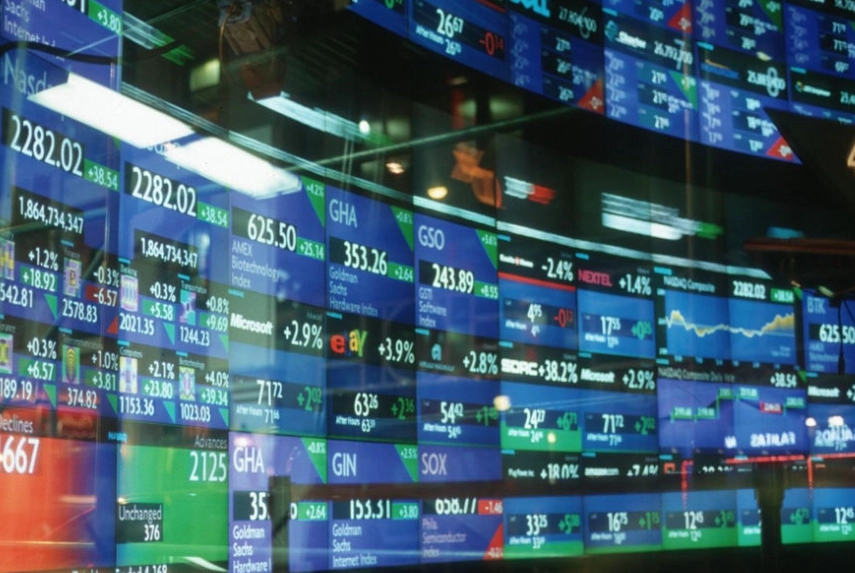
The key twist? Over 99% of futures contracts are never delivered. Traders close their positions before the expiration date. They're not interested in taking delivery of 40,000 pounds of live cattle. They're trading on the price movement of that asset.
Who Actually Trades Futures and Why?
Two main groups, with completely different goals.
1. The Hedgers (The Business Users)
This is the original purpose of the futures market. A farmer growing corn fears prices might fall by harvest. He can sell corn futures contracts today, locking in a price. If the market price drops later, his loss on the physical corn is offset by a gain on his futures position. An airline worried about rising jet fuel costs can buy oil futures to lock in prices. They use futures as insurance.
2. The Speculators (The Price Predictors)
That's likely you if you're reading this. Speculators provide the market liquidity that allows hedgers to operate. They aim to profit from price changes, with no intention of ever taking delivery. This is where the potential for profit and loss comes in.
The Core Mechanics: Margin, Leverage, and Settlement
This is where most beginners trip up. Understanding these terms is not optional.
Margin is not a loan. It's a performance bond, a good-faith deposit you put up with your broker to hold the position. Because you're agreeing to a future transaction worth much more, the exchange wants collateral.
Leverage is the byproduct. Because you only post a fraction of the contract's total value (the margin), you control a large asset with a relatively small amount of capital. This amplifies both gains and losses.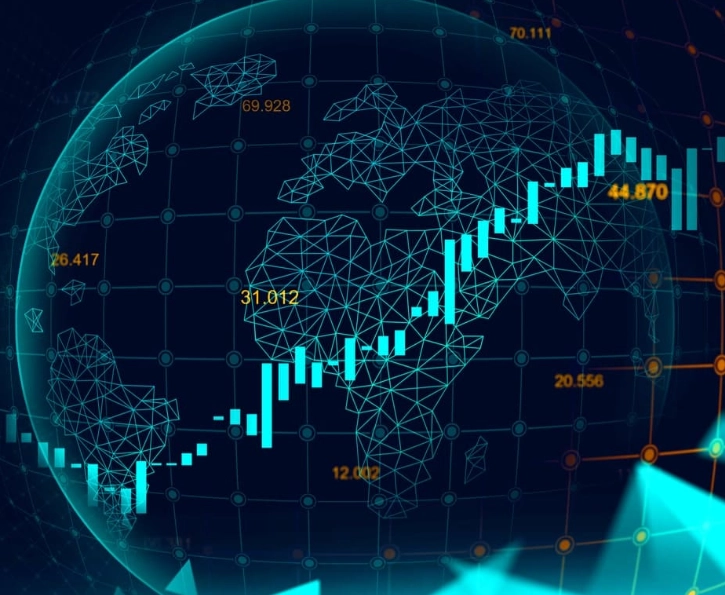
Let's use the E-mini S&P 500 futures contract (symbol: /ES) as a real example. One /ES contract is tied to $50 times the S&P 500 index. If the index is at 5000, the contract value is $250,000. The initial margin to trade one contract might be around $12,000.
See the leverage? With $12,000, you control a $250,000 position. A 1% move in the index (50 points) is $2,500. That's a 20% move on your margin capital. Powerful, and dangerous.
Mark-to-Market Settlement happens daily. Your profit or loss is calculated based on the day's closing price and added or subtracted from your account every single night. If your losses eat into your maintenance margin level, you'll get a margin call and must add funds immediately or be forced out of your position.
A Tour of the Major Futures Markets
You need to know what's out there. Each market has its own personality, trading hours, and what drives its price.
| Market Category | Popular Examples (Symbol) | Contract Size / Point Value | What Moves It? |
|---|---|---|---|
| Equity Indices | E-mini S&P 500 (/ES), Micro E-mini (/MES), Nasdaq-100 (/NQ) | /ES: $50 per index point /MES: $5 per point |
Corporate earnings, interest rates, economic data, geopolitics. |
| Commodities (Energy) | Crude Oil (/CL), Natural Gas (/NG) | /CL: 1,000 barrels; $10 per $1 move | OPEC decisions, inventories, global demand, geopolitical tensions. |
| Commodities (Metals) | Gold (/GC), Silver (/SI), Copper (/HG) | /GC: 100 troy oz; $100 per $1 move | Inflation, dollar strength, real interest rates, industrial demand. |
| Commodities (Grains) | Corn (/ZC), Soybeans (/ZS), Wheat (/ZW) | /ZC: 5,000 bushels; $50 per 1-cent move | Weather reports, planting/harvest data, global supply chain issues. |
| Interest Rates | 10-Year Treasury Note (/ZN), 30-Year Bond (/ZB) | /ZN: $1000 per full point | Federal Reserve policy, inflation expectations, economic outlook. |
| Currencies | Euro FX (/6E), Japanese Yen (/6J) | /6E: 125,000 Euros; $12.50 per pip | Central bank divergence, interest rate differentials, trade flows. |
My advice? Start with what you know. If you follow the stock market, /ES or /MES is a natural fit. If you're fascinated by macroeconomics and the Fed, look at /ZN. Don't trade crude oil because it's "hot" if you've never looked at an inventory report from the U.S. Energy Information Administration.
Common Futures Trading Strategies That Work
Strategy depends on your time horizon and personality. Here are two frameworks.
Directional Trading (You Think Price Will Go Up or Down)
This is the simplest. You buy (go long) if you're bullish, sell (go short) if you're bearish. The critical add-on is your trade plan. Before entering, you must know: 1) Your entry price. 2) Your profit target (where you'll take gains). 3) Your stop-loss (where you'll admit you're wrong and exit). Without all three, you're not trading, you're gambling.
Spread Trading (Playing the Price Relationship)
This is more advanced and often lower risk. You simultaneously buy one contract and sell a related one, betting on the change in the difference between them. A classic example is the Crude Oil Calendar Spread: buying a December crude oil contract and selling a February contract. You're not betting on whether oil goes up or down, but on whether the supply/demand dynamics will make December oil more expensive relative to February (or vice versa). It's a subtler play that often requires less margin.
Choosing a Platform and Broker: What Matters
Don't just pick the one with the flashiest ads. Your broker and platform are your lifeline.
Commission and Fees: It's not just the per-trade cost. Check for platform fees, data fees (real-time quotes for futures aren't always free), and inactivity fees. Some brokers bundle exchange fees, others add them on top.
Platform Stability and Tools: During high volatility (like Fed announcements), some retail platforms freeze or lag. That's a recipe for disaster. You need reliable execution. Also, does the platform have decent charting, and can it easily handle bracket orders (orders that attach your profit target and stop-loss automatically)?
Margin Requirements: Brokers can set their margin requirements higher than the exchange minimum. Compare. A broker with lower margins lets you use capital more efficiently, but it also means higher risk for you.
I spent years on a "cheap" platform that was clunky. The savings weren't worth the constant frustration and occasional missed order. I switched to a more professional platform (yes, it costs more) and my stress level dropped immediately. The toolset helped me analyze better, not just trade faster.
The Non-Negotiable Rules of Risk Management
This is the only section that might save your account. Everything else is secondary.
Rule 1: Risk a Fixed Percentage Per Trade. Never risk more than 1-2% of your total trading capital on any single trade. If your account is $10,000, your maximum loss on one trade should be $100-$200. This dictates your position size and where you place your stop-loss.
Rule 2: Use a Stop-Loss. Always. It's not a suggestion. A stop-loss is an automated order that closes your position at a predetermined loss level. It removes emotion. Place it at a logical technical level, not an arbitrary dollar amount.
Rule 3: Have a Daily Loss Limit. Decide the maximum you can lose in one day. For me, it's 5% of my capital. If I hit that, I shut down the platform. No revenge trading, no "one more try." This prevents a bad day from becoming a catastrophic month.
I learned Rule 3 the hard way. Early on, I had a 3% loss, got angry, doubled my size to "make it back," and proceeded to lose another 8% in the next hour. That single session set me back months. A daily loss limit is your circuit breaker.
Your Burning Questions Answered
Futures trading offers access and leverage you won't find in many other markets. That's its appeal and its primary danger. Approach it with respect, a solid plan, and an obsession with risk management. The market will always be there tomorrow. Make sure your capital is too.
Reader Comments