Let's cut to the chase. You want to learn crypto trading because you've seen the stories, felt the FOMO, and maybe even dabbled with a buy order that left you confused. The internet is flooded with "secret strategies" and signals from self-proclaimed gurus. It's overwhelming. I've been there. The truth is, learning to trade crypto isn't about finding a magic indicator. It's 80% psychology and risk management, 20% strategy. Most guides get that backwards.
This isn't a hype piece. It's a realistic roadmap. We'll skip the fluff and focus on the foundational steps that actually build competence, not just hope.
What You'll Learn in This Guide
- Step 1: Build the Trader's Mindset (Your Biggest Edge)
- Step 2: Getting Started - Wallets, Exchanges, and First Steps
- Step 3: Analysis & Core Trading Strategies
- Step 4: Risk Management - The Non-Negotiable Rule for Survival
- Step 5: Common Pitfalls & How to Build Your Process
- Your Trading Questions Answered
Step 1: Build the Trader's Mindset (Your Biggest Edge)
Before you look at a single chart, fix your head.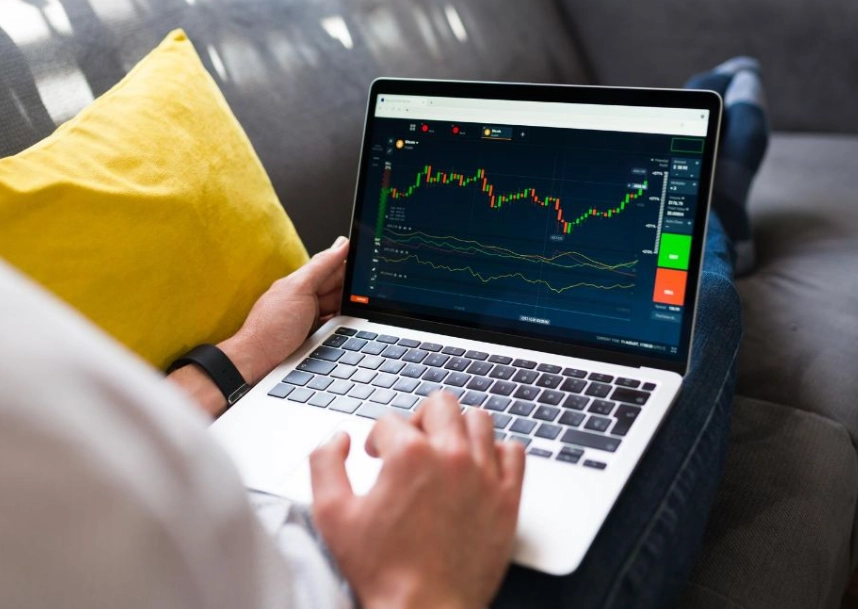
Trading is a probability game, not a certainty engine. You will have losing trades. A lot of them. If that sentence makes you uncomfortable, you need to work on this first. The goal isn't to be right every time; it's to be profitable over a large sample of trades by managing losses and letting winners run.
Emotional discipline is your real capital. Greed makes you hold winners too long, hoping for more. Fear makes you cut winners short or ignore your stop-loss. You need a set of written rules to follow, especially when your gut is screaming to do the opposite.
Start here: Define your "why." Are you looking for a side income? Full-time freedom? Just to understand the market? Your goals dictate your strategy (more on that later).
Step 2: Getting Started - Wallets, Exchanges, and First Steps
You need a place to trade. Don't overcomplicate this. Start with a reputable, user-friendly centralized exchange (CEX) that serves your region.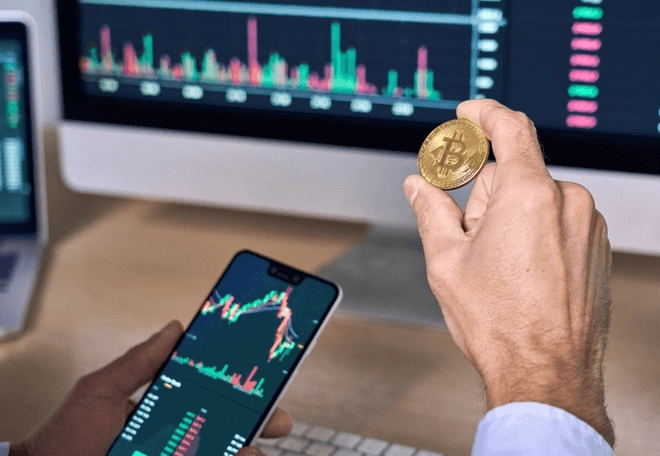
Choosing an Exchange: Look for security, fees, and asset selection. Platforms like Coinbase or Binance are good starting points due to their intuitive interfaces. For more advanced features, consider Kraken or Bybit. Always enable two-factor authentication (2FA).
Wallet Basics: For small amounts you plan to trade actively, keeping crypto on the exchange is fine. For larger sums you want to hold, use a non-custodial wallet like MetaMask or a hardware wallet (Ledger, Trezor). This is a key security habit.
Your first actions shouldn't be trades. They should be exercises:
- Deposit a small, fixed amount. I'm talking $100-$200. This is your "tuition." You are going to learn with this money, with the expectation you might lose it all. This removes emotional pressure.
- Practice with a paper trading account. Many platforms like TradingView offer this. Execute 20-30 simulated trades based on a simple idea (e.g., "buy when price crosses above the 50-day moving average"). Just get used to the mechanics.
- Understand order types. Know the difference between a market order (fills immediately at current price) and a limit order (fills only at your specified price or better). Limit orders are your friend—they prevent you from overpaying in volatile markets.
Step 3: Analysis & Core Trading Strategies
This is where most people jump in. Let's frame it correctly. There are two main schools of thought, and you should understand both.
Fundamental Analysis (FA) - The "Why"
FA asks: What is this project's long-term value? You're looking at the team, the technology, tokenomics (supply, distribution), community strength, and real-world use cases. Research reports from firms like Messari or CoinDesk can be helpful here. FA is for investors with a multi-month or year horizon.
Technical Analysis (TA) - The "When"
TA uses historical price and volume data to identify patterns and potential future movements. It's the language of short-to-medium-term traders. You don't need 20 indicators. Start with these three:
| Tool | What It Is | Common Beginner Use | The Pitfall |
|---|---|---|---|
| Trend Lines & Channels | Drawing lines connecting swing highs/lows. | Identifying uptrends (higher highs/lows) and downtrends. | Seeing patterns that aren't there. The market doesn't owe you a bounce at your line. |
| Support & Resistance | Price levels where buying/selling pressure has historically been strong. | Placing buy orders near support, sell orders near resistance. | Markets can "slice through" these levels with volatility. Never assume they will hold. |
| Moving Averages (MA) | An indicator that smooths price data to identify the trend direction. | Using the 50-day and 200-day MA to gauge overall market trend. | Lagging indicator. In a highly volatile market, it can give late signals. |
My take? New traders obsess over the perfect entry. They spend hours looking for a secret confluence of indicators. The exit and position size are far more important. A mediocre entry with great risk management will outperform a perfect entry with poor discipline every time.
Step 4: Risk Management - The Non-Negotiable Rule for Survival
This is the section that will save your account. If you ignore everything else, don't ignore this.
The 1% Rule: Never risk more than 1% of your total trading capital on a single trade. If you have a $1,000 account, your maximum loss per trade should be $10. This protects you from a string of losses wiping you out.
Stop-Loss Orders (SL): This is an automated order that sells your position if the price hits a predetermined level. It's your financial seatbelt. Always use one. Decide your stop-loss before you enter the trade, based on your analysis, not your hope.
Take-Profit Orders (TP): The flip side. This locks in profits at a target price. A common strategy is to use a Risk/Reward (R:R) ratio. If you risk $10 (1% of $1,000) on a trade, aim for a profit of $20 or $30. That's a 1:2 or 1:3 R:R. This means you can be wrong half the time and still be profitable.
Step 5: Common Pitfalls & How to Build Your Process
Let's run a case study. Meet Sam, a fictional but very real beginner.
Sam's Story: Sam deposits $500. He reads about Bitcoin looking bullish, so he buys $100 worth. It goes up 5%! He feels like a genius. He buys another $200. It drops 2%. Panicked, he sells for a small loss. He then sees a tweet about an "altcoin gem" about to "moon." He puts his remaining $400 into it. The coin pumps 10%, then crashes 40%. Sam's account is now worth ~$300. He's frustrated and quits.
What went wrong?
- No Plan: Trades were based on emotion and hype, not a strategy.
- Violated 1% Rule: His final trade risked over 80% of his remaining capital.
- No Stop-Loss: He had no automatic plan to limit the altcoin disaster.
- Revenge Trading: The loss on Bitcoin made him jump into the next thing to "make it back."
Sam's Fix - The Trading Journal: The single most powerful tool for learning. After every trade, win or lose, Sam should log:
| Date/Asset | Entry/Exit Price | Reason for Trade (Screenshot chart!) | Result (P/L) | Emotional State | Lesson Learned |
|---|---|---|---|---|---|
| 2023-10-26 / BTC | Bought: $34,100 Sold: $33,500 | "Felt bullish after news." → Bad. No objective trigger. | -$60 | Excited, then panicked | Need a clear rule for entry. Don't trade on "feeling." |
After 20 journal entries, patterns emerge. You'll see which strategies work for you and which mental traps you keep falling into.
Your process becomes: Analyze (FA/TA) → Plan Trade (Entry, SL, TP, Position Size) → Execute → Journal → Review Weekly.
Your Trading Questions Answered
What's the biggest mistake beginners make when they learn crypto trading?
How much money do I realistically need to start learning crypto trading?
How do I know if my trading strategy is actually working?
The path to learn crypto trading is a marathon of self-education. It's less about predicting the market and more about managing your reactions to it. Start small, focus on the process, and let the profits be a byproduct of your discipline. The market will always be here. Your job is to make sure your capital and your sanity are too when the real opportunity arrives.
Reader Comments