Let's cut to the chase. Asking if Dogecoin has a future isn't a simple yes or no question. It's a tug-of-war between its undeniable cultural power and its arguable technological shortcomings. Its future hinges less on a single factor like Elon Musk's next tweet and more on a complex mix of technological evolution, real-world adoption beyond memes, and its community's ability to pivot from pure hype to sustainable utility. I've watched DOGE since the 2013 joke, and the biggest mistake newcomers make is conflating price spikes with long-term viability. This analysis will separate the signal from the noise.
What You'll Find in This Deep Dive
The Surprisingly Sturdy (and Stagnant) Tech Foundation
Dogecoin started as a Litecoin fork, which itself is a Bitcoin fork. This gives it an inherited robustness. It uses the Scrypt proof-of-work algorithm, which is less energy-intensive than Bitcoin's SHA-256 (though still not green). Transactions are fast and cheap—often a fraction of a cent. That's a genuine utility.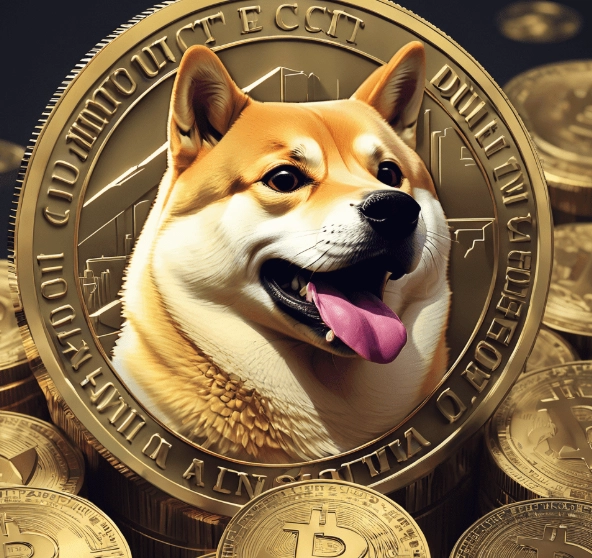
But here's the non-consensus part everyone glosses over: its development has been largely maintenance-mode for years. The core devs, led by people like Ross Nicoll, have done a fantastic job keeping the network secure and running. However, major protocol upgrades, smart contract capabilities, or layer-2 solutions that define modern crypto (like Ethereum's rollups or Solana's speed) are not on Dogecoin's roadmap. It's a reliable, simple payment rail, not an innovative smart contract platform.
Inflationary vs. Deflationary: A Feature, Not a Bug?
Dogecoin has a fixed annual inflation of 5 billion coins. This is often criticized compared to Bitcoin's hard cap. But in economics, a predictable, low inflation rate can encourage spending and use as a currency, rather than hoarding as a pure store-of-value asset. This was arguably the original joke-turned-philosophy. The problem? The crypto market largely values deflationary "digital gold" narratives over inflationary "digital cash" ones, putting DOGE at a perceptual disadvantage.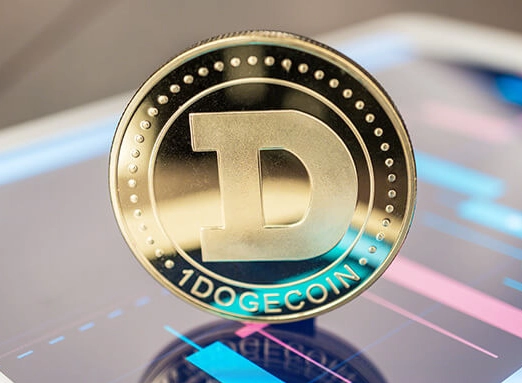
Adoption Drivers: More Than Just Tipping Online
Utility drives long-term value. Dogecoin's adoption has moved in fits and starts.
Payment Processing: Major merchants have flirted with DOGE. Tesla famously accepted it for merchandise (and briefly for cars) before stopping. Companies like Newegg, AMC Theatres, and the Dallas Mavericks have all accepted it. This isn't trivial—it provides real exit liquidity and utility. The infrastructure exists via processors like BitPay.
The "Tipping Economy" and Social Media: This remains a core use case. Reddit and Twitter (now X) communities use DOGE for tipping. It's microtransactions in action. While small in scale, it fosters a genuine, spending-oriented culture.
NFTs and the Dogechain Side Experiment: This is a fascinating, often misunderstood development. A community-led project called Dogechain (distinct from the main Dogecoin chain) emerged, offering smart contracts and NFTs wrapped around DOGE. It's a hacky workaround, but it shows the community's hunger for utility. Its success is shaky and highlights the main chain's limitations.
The Community: Dogecoin's Greatest Strength and Weakness
No other coin has a community like Dogecoin's. It's welcoming, charitable (funding NASCAR drivers, Olympic teams, and water wells in Kenya), and has an unbeatable meme culture. This is powerful marketing you can't buy.
However, this strength is a double-edged sword. The community's focus is often disproportionately on celebrity endorsements, primarily Elon Musk. I've seen portfolios swing 30% in a day based on a single ambiguous tweet. This creates a hyper-speculative, news-driven asset rather than one valued for its underlying technology or adoption metrics. The community's passion hasn't yet been fully channeled into demanding or funding significant technical upgrades to the core protocol.
The Hard Truth: Risks and Challenges You Can't Ignore
Let's be blunt about the headwinds.
Technological Stagnation: In a race where Ethereum is constantly upgrading, and Solana, Cardano, and others are pushing boundaries, standing still is a risk. Dogecoin's "it just works" philosophy may not be enough if users demand more complex financial applications.
The "Meme Coin" Overhang: It's the original meme coin, but the market is now flooded with thousands of others (SHIB, PEPE, etc.). This dilutes attention and capital. Dogecoin's first-mover advantage is its shield, but the category is inherently volatile and sentiment-driven.
Regulatory Uncertainty: As a proof-of-work coin with no central foundation, it's in a slightly better position than some. But if regulators crack down on crypto broadly, or specifically target coins deemed purely speculative, DOGE could be in the crosshairs. Its lack of a clear "utility" narrative beyond payments is a vulnerability here.
Concentration of Holdings: A significant percentage of DOGE is held in a small number of wallets. While not uncommon in crypto, it raises concerns about market manipulation and price stability.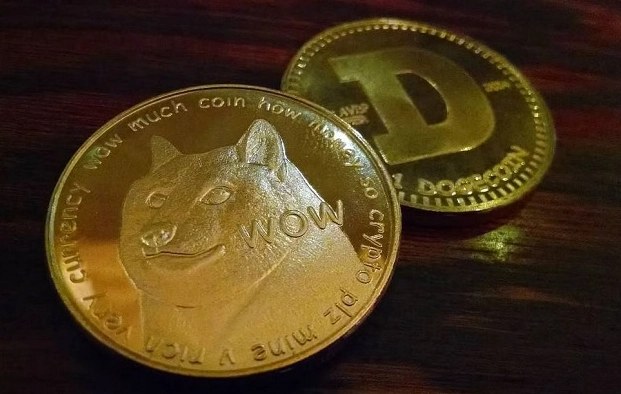
Dogecoin vs. Bitcoin: A Quick Reality Check
| Factor | Dogecoin (DOGE) | Bitcoin (BTC) | Impact on Future |
|---|---|---|---|
| Primary Narrative | Fun, accessible "digital cash" | Digital gold / Store of value | BTC targets institutional holds; DOGE targets spendable utility. |
| Supply Model | Inflationary (5B new/year) | Deflationary (hard cap 21M) | BTC scarcity is key to its value thesis. DOGE's model aims for stable, spendable value. |
| Development Pace | Conservative, maintenance-focused | Slow, ultra-conservative | Both are slow, but BTC's security and brand are unmatched. DOGE lacks BTC's "reserve asset" status. |
| Community Vibe | Charitable, meme-driven, retail-focused | Security-focused, libertarian, institutional | DOGE community is a powerful marketing engine but can be distractible by hype. |
Realistic Future Scenarios for DOGE
Based on these factors, let's map out potential paths.
The "Digital Cash" Niche Winner: This is the bullish case. Dogecoin carves out a permanent role as the internet's go-to, low-fee, fast tipping and microtransaction currency. Its brand and community are too strong to die. It becomes the PayPal of crypto—not the most technologically advanced, but widely accepted and used for specific, simple tasks. Major payment integrations solidify this.
The Eternal Meme/Community Asset: It survives and thrives primarily as a cultural icon and speculative asset, akin to a highly volatile "fan token" for the internet. Its price is tied to crypto bull markets and celebrity mentions, with sharp rallies and deep corrections. It never achieves broad, stable utility but never goes to zero due to its loyal base.
The Gradual Irrelevance: The bear case. As blockchain technology advances, a simple payment rail with no smart contracts, a fading meme novelty, and inflationary supply gets outcompeted. Newer, faster, more functional layer-1 or layer-2 solutions capture the payment and microtransaction niche. DOGE slowly fades into obscurity, with periodic nostalgia pumps.
My personal take? Scenario two, The Eternal Meme Asset, is the most likely baseline. It has too much brand equity to vanish. The path to Scenario one, the true "Digital Cash" winner, is possible but requires a concerted, community-led push for more serious merchant adoption and perhaps modest technical upgrades to improve wallet experience and scalability—something beyond the current maintenance mode.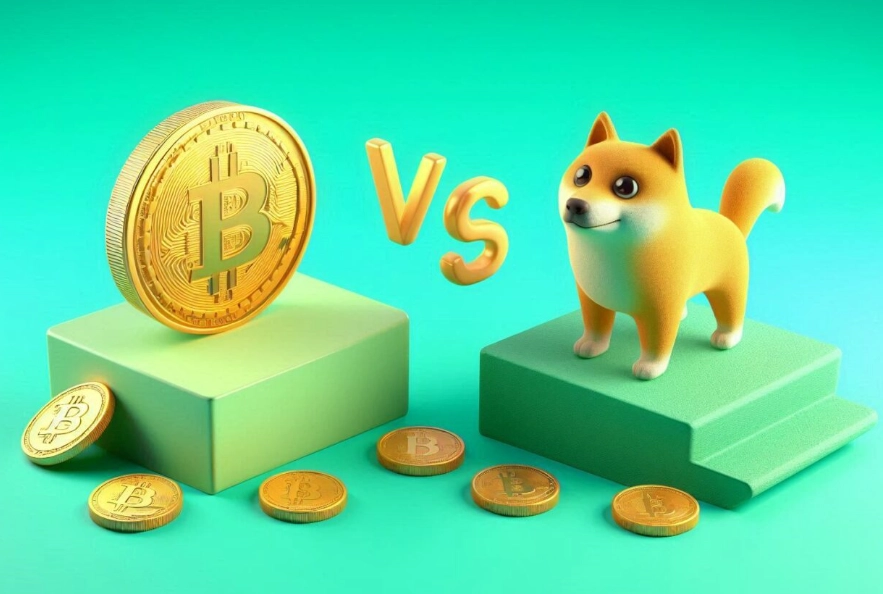
Your Dogecoin Future Questions Answered
So, does Dogecoin have a future? It absolutely has a future. The question is what kind of future. It's unlikely to become the dominant global financial layer. It is very likely to remain a persistent, culturally significant, and highly volatile asset in the crypto ecosystem—a testament to the power of community and meme magic, forever balancing on the edge between being a usable currency and the world's most valuable inside joke. Its path depends less on white papers and more on whether its community can build lasting utility on top of its unparalleled brand.
Reader Comments