You hear about people making money trading Bitcoin, Ethereum, or other cryptocurrencies. The stories are everywhere. But when you look at the charts and the jargon-filled exchanges, it feels overwhelming. Where do you even start? For most people, the real entry point isn't with complex leveraged derivatives. It's with spot trading. It's the foundational skill, the bread and butter of crypto investing. Forget the hype for a second. This guide is about understanding the actual mechanics, strategies, and, most importantly, the mindset needed to navigate spot markets without losing your shirt.
I've been in this space long enough to see cycles come and go. I made every mistake in the book early on—chasing pumps, ignoring fees, picking exchanges based on flashy ads. Spot trading, done right, is less about gambling and more about deliberate, informed decision-making. Let's break it down.
What's Inside This Guide?
- What Exactly Is Spot Trading? (No Fluff)
- Spot vs. Futures: Why This Choice Matters
- 3 Core Spot Trading Strategies That Actually Work
- How to Choose the Right Spot Trading Platform
- Step-by-Step: Executing Your First Spot Trade
- The 5 Most Common (and Costly) Spot Trading Mistakes
- Your Spot Trading Questions, Answered
What Exactly Is Spot Trading? (No Fluff)
At its simplest, a spot trade is a direct purchase or sale of a financial asset for immediate delivery. "Spot" refers to the current, on-the-spot market price. When you spot trade, you are buying the actual asset. If you buy 0.1 Bitcoin on the spot market, that Bitcoin is credited to your exchange account (or better yet, your private wallet). You own it.
The price is determined by the current balance of buy and sell orders on the exchange's order book. It's a straightforward transaction: you pay money, you receive an asset. The goal is to buy an asset at one price and later sell it at a higher price. The profit (or loss) is the difference between your buy (ask) price and your sell (bid) price, minus any trading fees.
This contrasts sharply with futures or margin trading, where you're dealing with contracts and borrowed money. Spot trading is the foundation. It's how you build a portfolio, hold assets for the long term (HODL), or engage in shorter-term tactical moves based on your analysis.
Spot vs. Futures: Why This Choice Matters for Your Capital
New traders often get confused here. The choice between spot and futures trading defines your entire risk profile. Let's be clear: futures trading is a professional's game, fraught with extreme risk due to leverage. Spot trading is accessible.
| Feature | Spot Trading | Futures Trading |
|---|---|---|
| Ownership | You own the actual asset. | You own a contract for future delivery. |
| Leverage | Typically 1:1 (no leverage). You control what you pay for. | High leverage available (e.g., 10x, 50x, 100x). You control a larger position with less capital. |
| Primary Risk | Market risk (asset price falls). Your max loss is your initial investment. | Liquidation risk. A small adverse price move can wipe out your entire position due to leverage. |
| Complexity | Low. Buy and sell. | High. Involves funding rates, contract expiries, margin maintenance. |
| Best For | Beginners, long-term investors, accumulating assets, learning market dynamics. | Experienced traders hedging portfolios or speculating on short-term volatility with advanced risk management. |
I see too many beginners lured by the potential 100x gains promised by leverage. They ignore the 100x losses that happen far more frequently. Start with spot. Understand how the market moves with your own capital on the line. Then, if you're still curious, you can explore derivatives with a tiny portion of your portfolio.
3 Core Spot Trading Strategies That Actually Work
Strategy prevents you from being reactive. It turns you from a gambler into a trader. Here are three frameworks, from the most passive to the more active.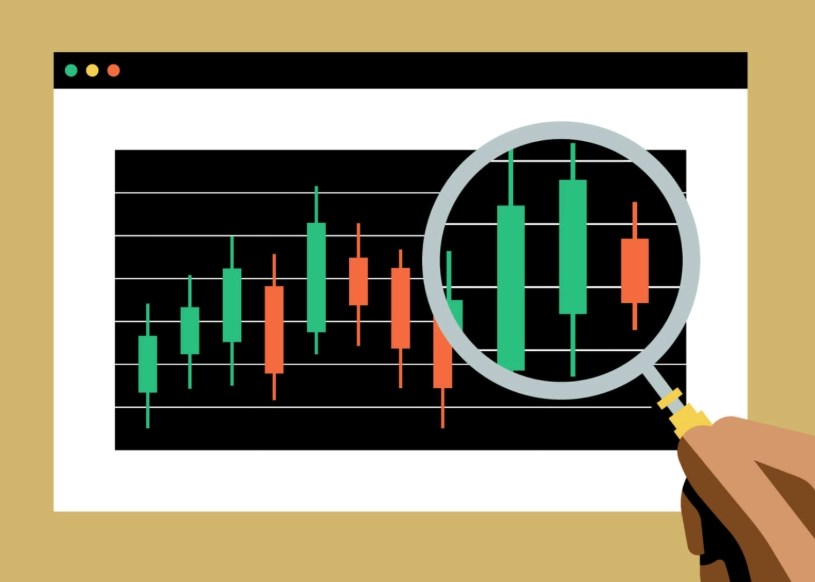
1. Dollar-Cost Averaging (DCA): The Set-and-Forget Powerhouse
This is my personal favorite for building long-term positions. You ignore trying to time the market. Instead, you invest a fixed amount of money at regular intervals (e.g., $100 every week). Sometimes you buy high, sometimes you buy low. Over time, you achieve an average purchase price.
How to execute: Set up a recurring buy order on your exchange for your chosen asset. Turn it on and focus on your life. It removes emotion completely. The data from platforms like CoinMarketCap often shows that simple DCA into major assets like BTC or ETH over multiple years outperforms most attempts at active timing.
2. Swing Trading: Riding the Market Waves
Swing trading aims to capture gains in an asset over a period of days to several weeks. Traders use technical analysis (chart patterns, indicators like RSI or Moving Averages) and sometimes fundamental news to identify potential entry and exit points.
The process looks like this:
- Identify a Trend: Is the asset in a clear uptrend or downtrend on the daily chart?
- Wait for a Pullback: In an uptrend, wait for the price to dip to a key support level (like a moving average).
- Set Clear Targets: Decide your profit target (e.g., previous resistance high) and your stop-loss (the price at which you'll admit the trade is wrong and exit).
- Execute and Manage: Place the trade and don't move your stop-loss further away if the price goes against you. That's the amateur move.
3. Breakout Trading: Catching the Momentum
This strategy involves buying an asset when its price moves above a defined resistance level with increased volume. The idea is that the breakout signifies a surge of new buying interest and the start of a new upward move.
A critical nuance most guides miss: False breakouts are incredibly common. A savvy trader doesn't buy the moment the price ticks above resistance. They often wait for a "retest"—where the price breaks out, pulls back to the former resistance level (which should now act as support), holds there, and then resumes upward. Buying on the retest offers a better risk-reward ratio than chasing the initial spike.
How to Choose the Right Spot Trading Platform
Your exchange is your gateway. A bad choice can lead to high fees, poor security, or frustrating user experience. Don't just pick the one with the flashiest Super Bowl ad. Consider these factors:
- Security & Reputation: This is non-negotiable. Has the exchange been hacked? How do they store user funds (mostly in cold storage)? Look for a long, clean track record. Research on sites like CryptoCompare or community forums like Reddit can reveal user experiences.
- Trading Fees: Usually a maker-taker fee schedule. Makers (those who provide liquidity by placing limit orders) pay less than takers (those who take liquidity with market orders). Fees around 0.1% are standard; some exchanges offer fee discounts for holding their native token or based on 30-day trading volume.
- Available Assets: Does it have the coins you want to trade? Major exchanges like Binance, Coinbase, and Kraken offer hundreds of pairs.
- User Interface (UI): Is it intuitive for a beginner? Some platforms have a "simple" and "advanced" view. This is crucial—you don't want to make a costly error because the interface was confusing.
- Geographic Restrictions: Ensure the exchange operates legally in your country.
- Customer Support: Hope you never need it, but when you do (e.g., a failed withdrawal), it's everything. Check if they have live chat, ticket systems, or just a hopeless FAQ page.
My advice? Start with a large, reputable, regulated exchange like Coinbase (for extreme simplicity) or Kraken (for a great balance of security and features). You can explore others later.
Step-by-Step: Executing Your First Spot Trade
Let's make this concrete. Imagine you've done your research and want to buy $500 worth of Ethereum (ETH).
- Fund Your Account: Deposit USD (or your local currency) via bank transfer, debit card, or other accepted method. This might take a few minutes to a couple of days.
- Navigate to the Trading Interface: Find the "Trade" or "Markets" section and select the ETH/USD trading pair.
- Understand Order Types:
- Market Order: "Buy at the best available price right now." Fast, but you have less control over the exact price, especially in volatile markets. You might experience "slippage."
- Limit Order: "Buy ETH, but only if the price reaches $3,200 or lower." You set the price. The order sits on the book until the market hits your price. This is the preferred method for most strategic trades.
- Place a Limit Order (Recommended): Enter the price you're willing to pay per ETH (e.g., $3,200). Enter the amount in USD you want to spend ($500). The interface will show how many ETH you'll receive if the order fills. Review the estimated fee. Submit the order.
- Manage Your Order: Your order will appear in "Open Orders." If the market dips to $3,200, your order will execute, and the ETH will appear in your spot wallet. You can cancel the order anytime before it fills if you change your mind.
- Plan Your Exit: Immediately after buying, decide under what conditions you will sell. Will you sell if it rises 20%? Will you sell if it drops 10% (a stop-loss)? Write it down.
The 5 Most Common (and Costly) Spot Trading Mistakes
I've made most of these. Learn from my wasted capital.
1. Trading Without a Plan: Entering a trade because of a "feeling" or a Twitter tip. This is gambling. Every trade needs a predefined entry, profit target, and stop-loss.
2. Letting Losses Run & Cutting Profits Short: The psychological trap. You hold a losing trade, hoping it will bounce back (it often doesn't). Conversely, you sell a winning trade too early out of fear, missing out on larger gains. Your plan's stop-loss and profit target are designed to combat this.
3. Overlooking Fees: Making many small trades can seem profitable until you calculate the fees. They eat into your capital. Factor them into your profit/loss calculations.
4. Chasing "Altcoin Season" Hype: Buying obscure, low-market-cap coins after they've already pumped 300% in a day is a recipe for buying the top. The smart money often accumulates quietly.
5. Leaving Assets on the Exchange: "Not your keys, not your coins." For significant holdings, transfer them to your own private hardware wallet (like a Ledger or Trezor). Exchanges are targets for hackers. Use them for trading, not as long-term banks.
Your Spot Trading Questions, Answered
The journey in spot trading is a marathon, not a sprint. It's about consistent learning, disciplined execution, and managing risk above all else. Start with the basics outlined here, practice with small amounts, and focus on building a robust process. The markets will always be there. Your job is to make sure your capital is too.
Reader Comments