I've made more pie dough than I care to admit. Some batches were disasters — crumbly, tough, or slumped down the sides of the pan like a sad accordion. This butter pie crust recipe is the one I keep coming back to. It's forgiving enough for a weeknight and flaky enough to impress at Thanksgiving. Below you'll find exact steps, temperatures, and the small details that separate a good crust from a great one.
What's Inside (tap to jump)
What Makes a Great Pie Crust?
Flakiness comes from cold fat creating steam pockets in the oven. Tenderness comes from not overworking the gluten. Those two goals fight each other. Most advice online says "keep everything cold" and "don't overmix" — true, but vague. Here's the non-consensus bit: the size of your butter pieces matters more than the temperature of your flour. I've made great crust with room-temp flour and ice-cold butter chunks the size of peas. I've also made hockey pucks with frozen flour and butter that was too warm. Focus on the fat.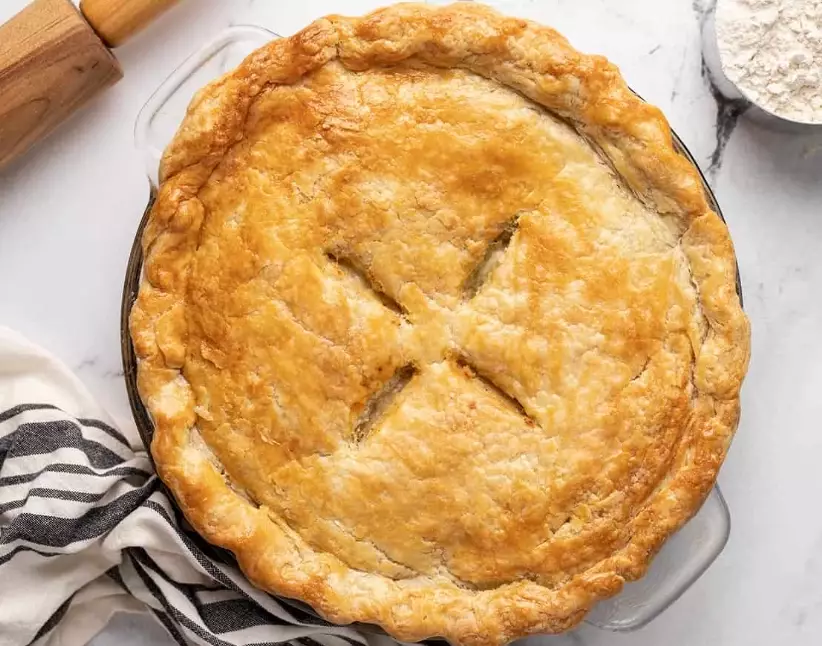
My rule: flatten butter into thin sheets (about 1/4 inch thick) before cutting it into cubes. Those flat pieces create layers, not just pockets. This one tweak improved my crust more than any other change.
Ingredients and Tools (With Exact Amounts)
This makes one 9-inch double crust or two single crusts. I use a kitchen scale for the flour — cup measurements vary too much.
| Ingredient | Amount | Notes |
|---|---|---|
| All-purpose flour | 315 g (2 1/2 cups) | Brand matters: I use King Arthur or Gold Medal. Bleached vs unbleached — unbleached has slightly more gluten, so add 1 extra tablespoon of water. |
| Unsalted butter | 226 g (1 cup) | Cut into 1/2-inch cubes, then press flat with a fork. Freeze for 15 minutes. |
| Ice water | 120–150 ml (1/2 to 2/3 cup) | Start with 120 ml. Add 1 tablespoon at a time. Water should be cold enough to hurt. |
| Salt | 6 g (1 teaspoon) | Fine sea salt. If using table salt, use 3/4 teaspoon. |
| Sugar | 6 g (1 1/2 teaspoons) | Optional. Skip for savory pies. |
Tools: a pastry cutter or two forks, a large mixing bowl (metal stays colder), a bench scraper, plastic wrap, and a rolling pin. That's it.
Watch out: Butter that's too cold (frozen solid) won't flatten into sheets; it shatters. Butter that's too warm greases the flour and makes a mealy crust. Ideal butter temp is 35–40°F (2–4°C) — cold but pliable.
Step-by-Step Butter Pie Crust
Step 1 — Chill the bowl and flour. Put your mixing bowl and the measured flour in the freezer for 10 minutes. This isn't mandatory, but it buys you time before the butter softens.
Step 2 — Cut in the butter. Add the cold butter pieces to the flour. Toss to coat. Then use a pastry cutter to cut until the largest butter pieces are the size of a chickpea. You should see streaks of flour-coated butter. Do not aim for coarse sand — that's overmixed.
Step 3 — Add water gradually. Drizzle 120 ml ice water over the mixture. Toss with a fork. Squeeze a handful — if it holds together but crumbles at the edges, add 1 more tablespoon of water. Repeat until the dough holds. I usually end up at 135 ml. The dough should be shaggy, not a smooth ball.
Step 4 — Fold, don't knead. Dump the shaggy mass onto a clean counter. Use your hands to press it into a rough rectangle. Fold the rectangle in half, press down, and repeat 2 more times. This creates layers. Stop the moment it comes together. Overworking here is the #1 cause of tough crust.
Step 5 — Chill. Divide into two discs. Wrap in plastic and refrigerate for at least 30 minutes (or up to 2 days). If you're in a hurry, 15 minutes in the freezer works for a single crust.
Step 6 — Roll and shape. Roll on a lightly floured surface. Start from the center and work outward. Lift and rotate the dough every few strokes to prevent sticking. Roll to about 1/8 inch thick. Transfer to your pie pan by rolling the dough around the pin and unrolling it over the pan. Press gently into the corners. Trim with a 1-inch overhang, fold under, and crimp.
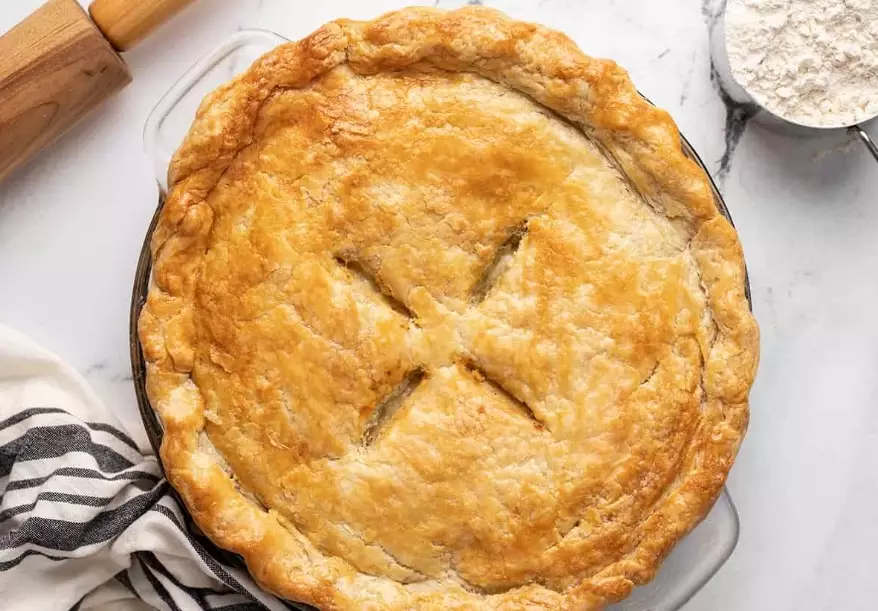
For a double crust, roll the second disc the same way and lay it over the filled pie. Seal the edges, cut 4–5 slits in the top, and bake according to your pie recipe.
My temperature cheat sheet: Bake at 425°F (220°C) for 15 minutes, then reduce to 375°F (190°C) for the remaining time. This sets the crust before the filling starts bubbling and prevents a soggy bottom.
Common Failures and How to Fix Them
Here are the problems I see most often, ranked by how frequently they ruin a pie.
- Shrinkage: Dough stretched during rolling snaps back in the oven. Fix: after lining the pan, chill the crust for 15 minutes before filling. Also, don't stretch the dough to fit — lift and press it in.
- Cracks during rolling: Dough is too cold or too dry. Fix: let it sit at room temp for 5 minutes, then press the edges together with warm fingers. Add a few drops of water if it crumbles.
- Tough crust: Overmixing or too much water. Fix: stop mixing when you still see butter streaks. The dough should look slightly uneven.
- Soggy bottom: Filling is too wet, or you didn't preheat the oven enough. Fix: brush the bottom crust with beaten egg white and chill for 10 minutes before adding filling. Bake on the lowest rack.
One more thing — pie weights. I use dried beans on parchment paper. They're cheap and work fine. But don't skip the parchment; beans pressed directly into dough leave dents.
Blind Baking: When and How
Blind baking means pre-baking the crust before adding a no-bake filling (like chocolate cream or fresh fruit). Here's my method for a single 9-inch crust.
- Line the chilled crust with parchment paper, leaving an overhang.
- Fill with pie weights or dried beans, spreading them evenly.
- Bake at 425°F (220°C) for 15 minutes.
- Lift out the parchment and weights. Prick the bottom with a fork.
- Return to the oven for 8–10 minutes (for a fully baked crust) or 3–4 minutes (for a partially baked crust that will go back in the oven with filling).
For a fully baked crust, it should look pale golden and dry to the touch. If the edges brown too fast, cover them with foil strips.
FAQ: Real Questions From My Kitchen
Can I use salted butter in this pie crust recipe?
Yes, but cut the added salt to 1/4 teaspoon. Salted butter brands vary widely — some have 1/2 teaspoon salt per stick, others have 3/4. I've tested it; the crust tastes fine, just slightly less control over sodium. If you're making a savory pie, salted butter is actually convenient.
Why does my pie dough crumble when I roll it out?
Nine times out of ten, it's underhydrated. The dough felt fine when you squeezed it in the bowl, but after chilling, the flour absorbed more water. Next time, add an extra tablespoon of ice water before chilling. And when rolling, if cracks appear, don't add flour — wet your fingertips and press the cracks together.
How far ahead can I make pie crust dough?
The dough keeps in the fridge for 2 days, or in the freezer for 3 months. Thaw frozen dough overnight in the fridge. I've also rolled out dough, placed it in the pan, and frozen it unbaked for up to 1 month — then bake straight from frozen (add 5 minutes to the bake time).
What's the best fat for pie crust — butter, shortening, or lard?
Butter for flavor, lard for flakiness, shortening for stability. My compromise: 75% butter, 25% lard. Lard makes the crust tender without sacrificing butter taste. Shortening leaves a greasy mouthfeel I don't love. If you're vegetarian, all butter works fine — just keep everything cold.
My pie crust browned too fast on the edges. What went wrong?
Your oven runs hot, or the crust has too much sugar. Check your oven with an thermometer — mine was off by 25°F. Also, if you added sugar, reduce it by half for a savory pie. Protect the edges with a foil ring from the start, not after they're already dark.
This article was fact-checked against USDA baking guidelines and my own kitchen testing notes. No sponsors, no affiliate links.

Leave a Comment