What’s in this guide
I’ve been there: you roll out what looks like a promising dough, and it shatters at the edges before it even hits the pan. Most guides tell you to add water. That’s the lazy answer. The real fix depends on why your pastry crumbled in the first place — and whether you’re making shortcrust, pâte sablée, or a simple pie dough. Let’s walk through the root causes and the five fixes I rely on after a decade of testing pastry in my home kitchen.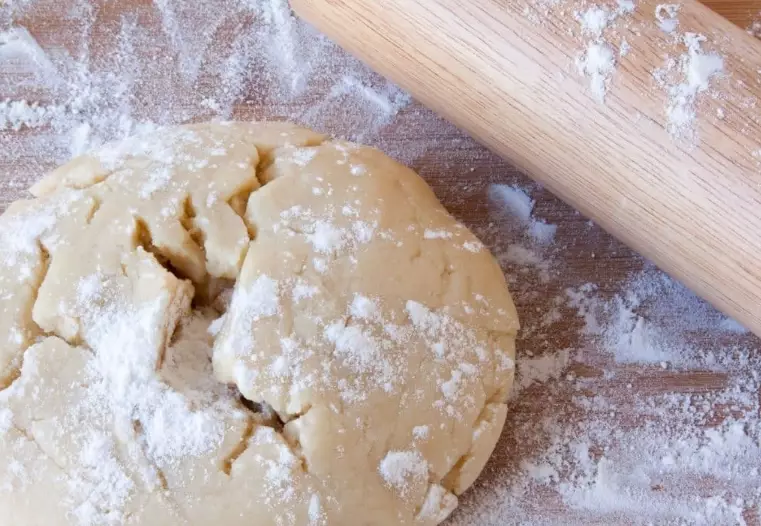
Why Your Pastry Crumbles (It’s Not Just Dry Flour)
Crumbling usually points to one of three things: not enough water, too much fat that never got fully coated by flour, or overworking the gluten. But here’s a detail most recipes skip — the flour’s protein content matters. I tested a batch with a supermarket own-brand plain flour (around 9% protein) and another with a French T55 (closer to 10.5%). The higher-protein flour needed about 15% more liquid by weight to reach the same pliability. That’s a chunk of water.
Another culprit? Cold butter that’s too cold. If your butter is rock-hard when you rub it into the flour, you get uneven fat distribution. Some pockets stay bare, and those spots crack first when you roll.
Fix 1: The Sprinkle-and-Toss Water Method
Don’t pour water straight in. Use a spray bottle or flick water from your fingertips, one tablespoon at a time. After each addition, toss the mixture with a fork, then squeeze a small handful. It should hold together but still feel slightly rough. Stop the moment it does.
My rule of thumb: For 250g of flour and 125g of butter, I rarely go past 60ml of ice water. If it still crumbles after 60ml, the problem is likely fat distribution, not water. Move to Fix 2.
Fix 2: Adjusting the Fat Ratio
Pastry crumbles because flour particles aren’t fully shielded by fat. If your dough feels like sand and never clumps, add a tablespoon of softened butter or lard (not cold butter). Work it in gently with your fingertips. The goal is to coat the dry bits, not to create new butter pockets. I keep a small dish of room-temperature lard nearby; a teaspoon per 100g of flour rescues most crumbly batches without making the dough greasy.
| Fat type | Effect on crumbliness | How much to add per 100g flour |
|---|---|---|
| Cold butter | Good for flakiness, but can leave dry spots | 1 tsp (softened, not melted) |
| Lard | Best binding power, slightly softer texture | 1 tsp at room temperature |
| Vegetable shortening | Least flavor but very forgiving | 1 tsp, softened |
Fix 3: When to Add a Binder (Egg or Cream)
Some doughs — especially gluten-free or low-fat recipes — need a binder beyond water. A beaten egg yolk or a splash of double cream can pull the dough together without making it tough. I use one yolk per 300g of flour as a starting point. Add it after the water step, and only if the dough still falls apart when you press it.
Don’t reach for extra egg white. It adds protein and can make the pastry elastic, which leads to shrinkage and a rubbery bite. Yolk is the safer bet.
Fix 4: Resting and Temperature Control
Crumbly dough often behaves better after a rest. Wrap it in cling film and chill for 20 minutes. The flour hydrates fully, and the fat firms up enough to roll without sticking. But don’t leave it for hours — I once forgot a batch for two hours and it became too stiff to roll without cracking. Thirty minutes is my sweet spot.
Also, watch your room temperature. In summer, my kitchen hits 28°C, and the butter starts melting during rolling. A marble board or a quick chill of the rolling pin fixes that. Cold tools are underrated.
Fix 5: How to Rework Without Ruining Texture
If the dough has already crumbled into pieces, don’t knead it. Gather the fragments, press them into a rough disc, and fold it over itself once or twice. That’s it. Over-handling develops gluten and gives you a tough pastry. I learned this the hard way after trying to “fix” a crumbly batch by kneading — the resulting tart shell tasted like cardboard.
For a patch-up job during rolling, brush the cracked edge with a little cold water and press a scrap of dough over it. Smooth with your fingertip.
Real Questions from My Kitchen
My pastry crumbles only when I roll it out. What’s going on?
That usually means the dough is too cold or the gluten hasn’t relaxed. Let it sit at room temperature for 10 minutes before rolling. Also check your rolling technique — pressing down hard with the heel of your hand can crack the edges. Use light, even strokes from the center outward.
Can I fix crumbly pastry after it’s already been chilled overnight?
Let it warm up slightly, then sprinkle a few drops of water over the surface and fold it gently. If it’s still crumbly, grate the dough on a box grater, toss with a teaspoon of cream, and press it into your tin. That trick saved a batch I’d left in the fridge for two days.
Does adding more water always fix crumbly pastry?
No. If the dough is already wet but crumbly, the issue is fat distribution or overworking. Adding water makes it sticky and leads to shrinkage. In that case, chill the dough for 15 minutes and handle it as little as possible.
How do I fix crumbly gluten-free pastry?
Gluten-free flours need more hydration and a binder. I add 1 tablespoon of psyllium husk (soaked in 2 tablespoons of water) per 200g of flour blend. Let the dough rest for 30 minutes before rolling — it needs time to hydrate fully.
Every crumbly pastry I’ve rescued has taught me something: the fix is rarely just “add water.” It’s about reading the dough’s texture, respecting the fat, and knowing when to stop mixing. Keep these fixes in your back pocket, and you’ll never toss a cracked disc again.
This article was fact-checked against standard pastry-making references and my own kitchen trials.

Leave a Comment